Our mental state changes continuously.
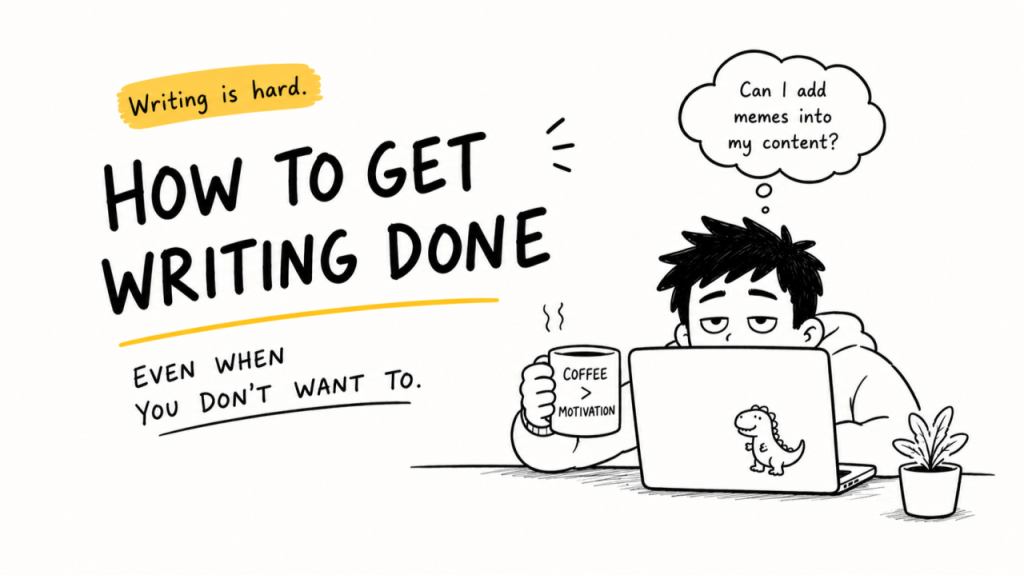
Not every day you are prepared (mentally) to write a long article. Some days you feel energized and words flow naturally. Other days, opening a blank document feels like a chore.
Yet, if writing is part of your job, you still need to show up.
So how do you make the process easier?
I’ve been writing professionally since 2016. And in this time, I have faced with both the fun part and the boring part of writing. But I still aim to keep going…
Here are a few tricks I have been found useful following to get myself up to speed.
1. Minimal Viable Action
Blank white space is scary. Trust me — I know the fear.
But the actual fear is usually not the blank page itself.
It’s the thought:
“What if I don’t write the perfect sentence?”
“What if people don’t like it?”
You know what? Leave those thoughts out the window.
It’s the age of AI. You can generate a half-decent article or even some actually useful sections using ChatGPT or other tools.
Give yourself a head start. It’s better to start with something imperfect than not start at all.
I often tell myself that my job is not to create the final version immediately. My job is simply to create Version 1.
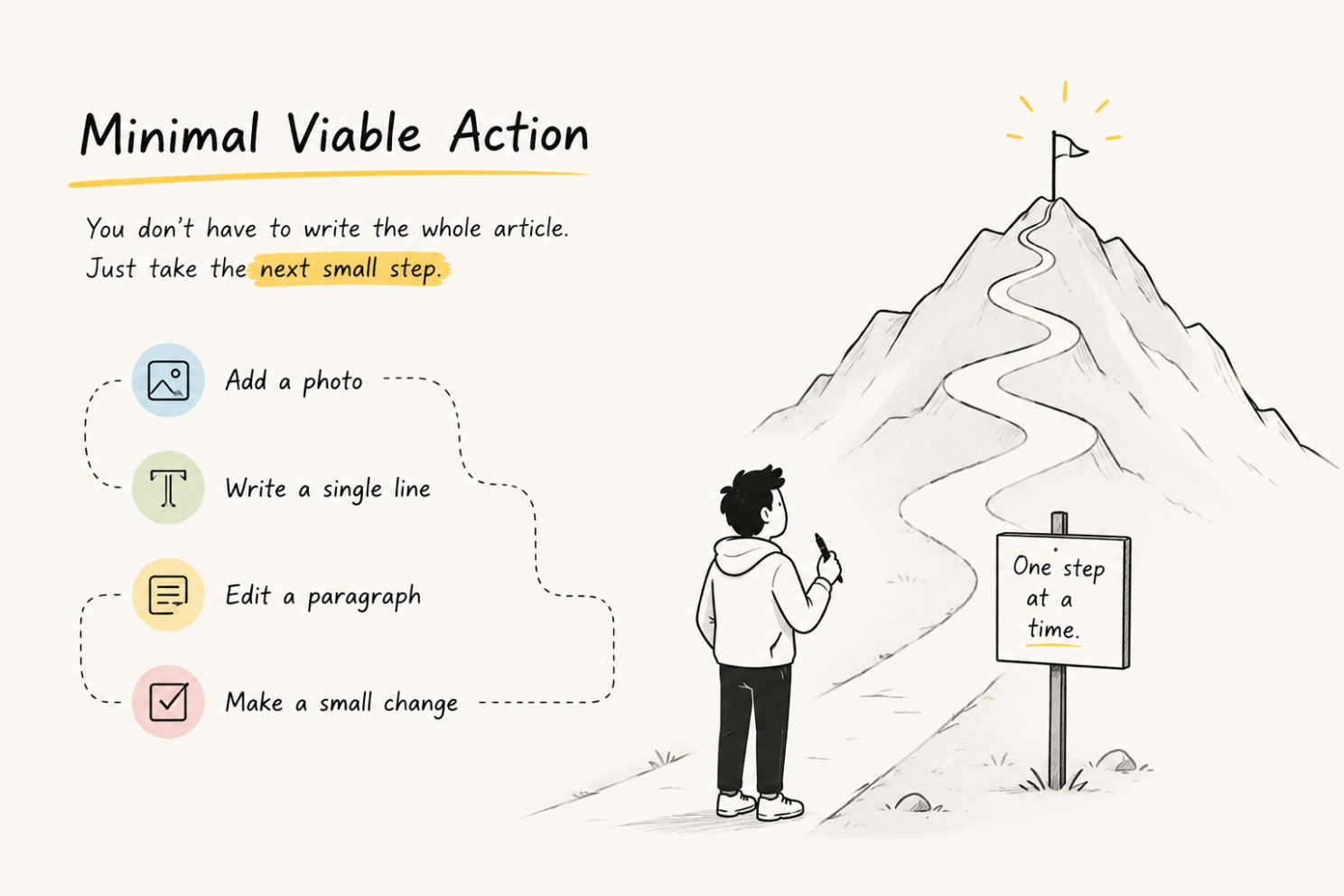
Start making small changes.
- Add a photo.
- Write a single line.
- Edit a paragraph.
Take the action that seems do-able to you at this moment – AKA taking the Minimal Viable Action.
Writing a good article is like climbing a mountain. You don’t reach the top in one jump.
You do it one step at a time.
2. Your research already does 50% of the job
Every new piece of content is a product.
You’re launching something new into the world.
If you don’t know who it’s for, what problem it solves, or what information people are looking for, you’re basically shooting bullets in the dark.
That’s why research matters so much.
- Read articles.
- Read Reddit discussions.
- Read expert opinions.
As you do this, something interesting happens. The topic starts feeling familiar.
It becomes less intimidating.
You know, procrastination is often another word for fear.
And fear usually comes from uncertainty.
Even if you’re an expert on a topic, every article demands unique perspective and approach.
Once you’ve done enough research and fully understand the topic, the words come naturally.
3. Follow the bottom-top approach
Logically, most people start writing from the introduction.
Then the benefits section. Then the main body.
My approach is usually the opposite: Start from the bottom.
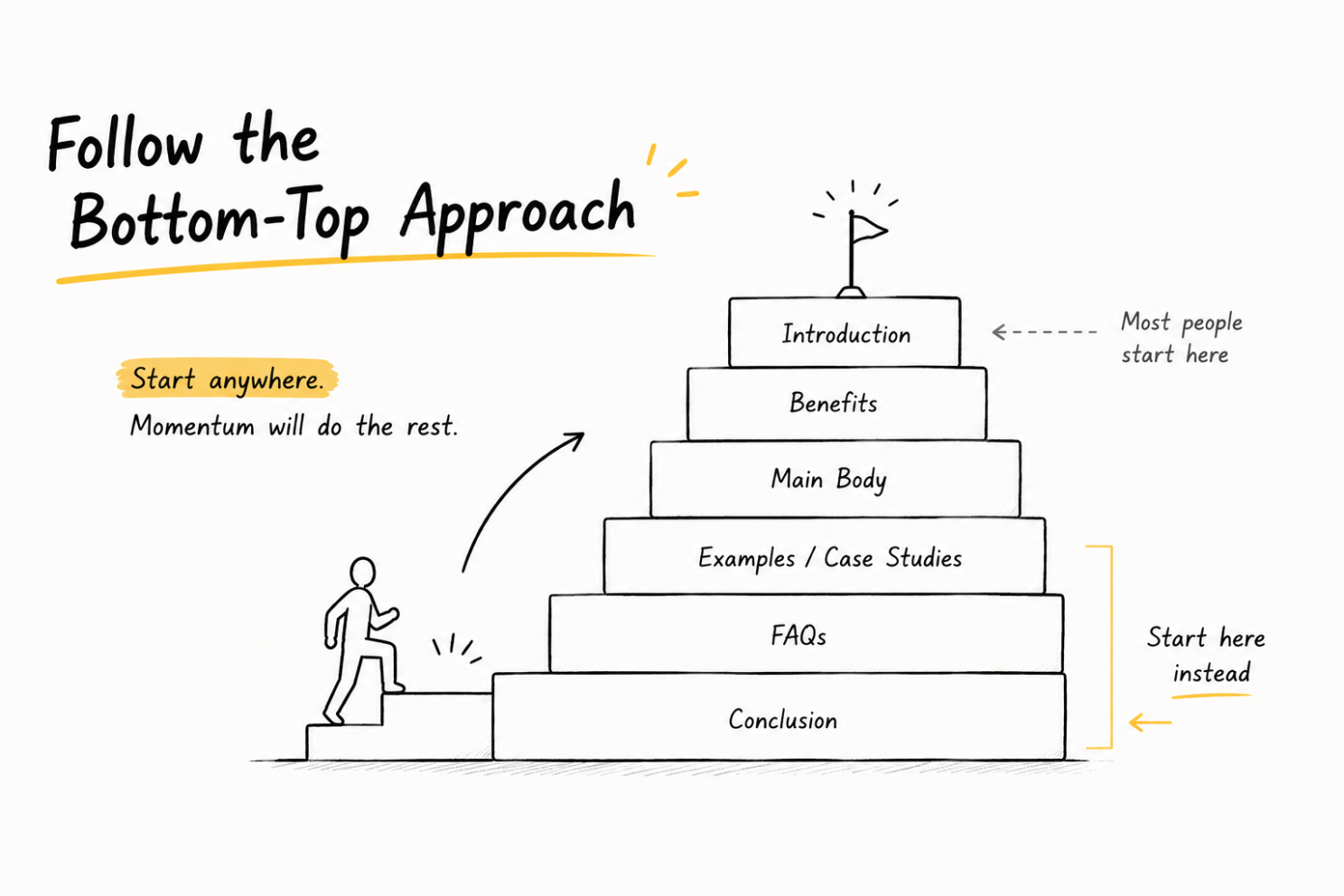
Write the FAQs first, or the examples section.
Or whichever section feels easiest.
When writing a blog, you have an outline – and you’re constantly looking ahead:
“Oh, I still need to write all these sections.”
That creates mental pressure.
But if you’ve already finished the sections at the bottom, you gain a sense of progress and peace of mind.
The article suddenly feels smaller. More manageable.
You don’t have to start with FAQs though. The bottom-top approach is really about starting wherever you feel like.
Pick the section that feels least scary and begin there. Momentum will do the rest.
4. Write the introduction at the end
The introduction is usually the hardest part. You don’t agree?
Think about it.
You just started writing – you haven’t fully explored the topic yet. You don’t know how the article will turn out finally.
So how are you supposed to know exactly what the introduction should say?
Most of the time, you’re trying to summarize an article that doesn’t exist yet.
That’s why I leave the introduction for later.
Once all the other sections are written, I know exactly what I covered – what the key takeaways are.
Now writing the introduction becomes much easier because I’m simply giving readers a sneak peek of what they’re about to learn.
5. Visuals say a thousand words
There have been many times in my writing career where I added the images first and wrote the content later.
It works surprisingly well. Especially for technical content.
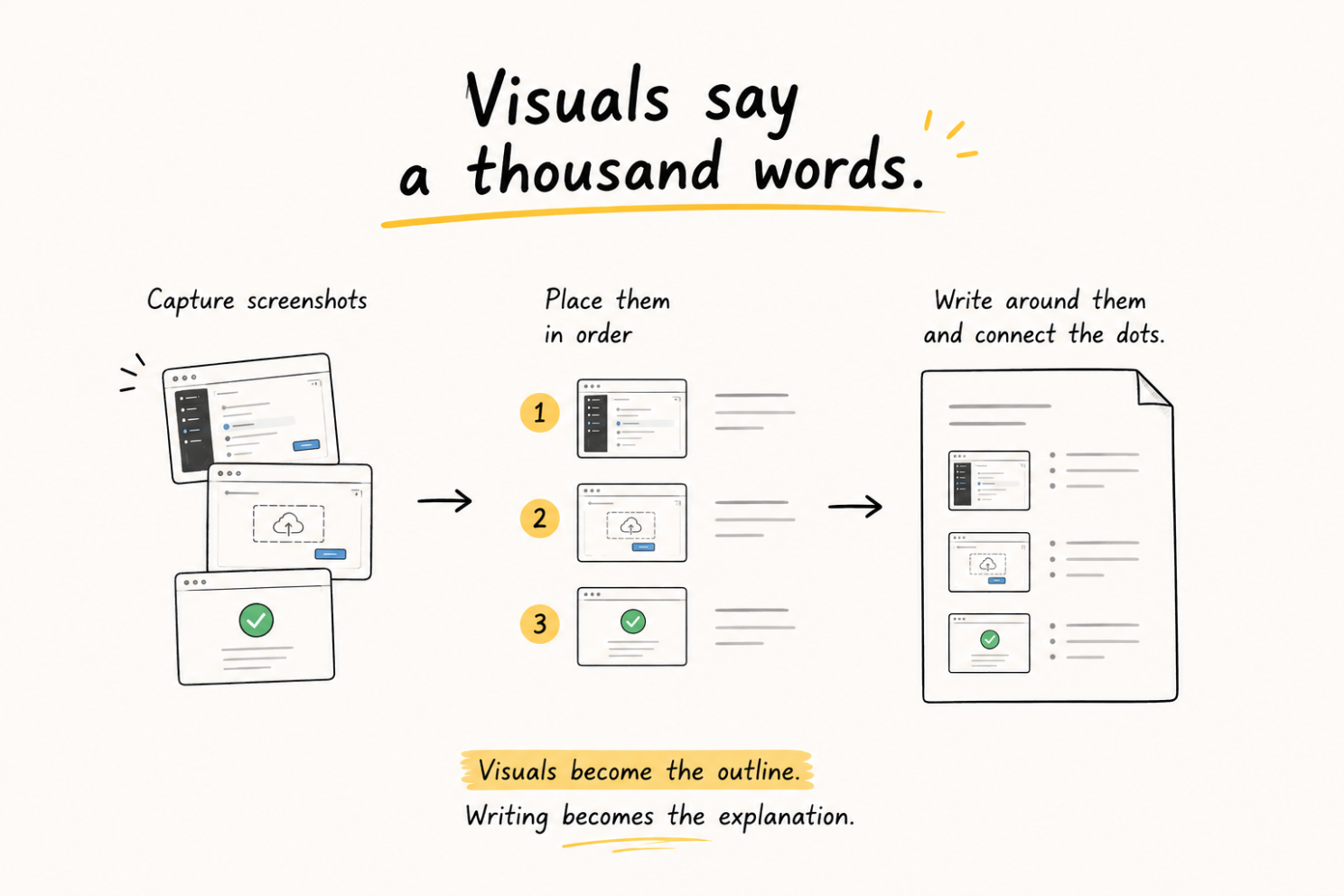
I write a lot of step-by-step plugin tutorials. Naturally, those guides require screenshots.
So sometimes I capture all the screenshots first, place them in the document, and then explain what’s happening underneath each image.
The visuals become the outline.
The writing becomes the explanation.
And suddenly, what felt like a difficult article becomes a simple process of connecting the dots.
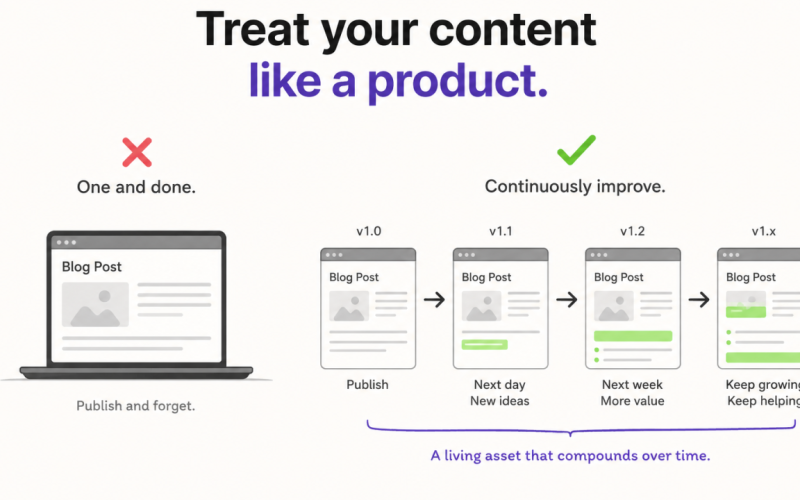
6. Ship it. Improve it later.
This isn’t my saying.
Many successful founders, CEOs, and entrepreneurs repeat the same advice.
If a product is 70% ready, launch it.
Then improve it through updates.
Writing works the same way. Don’t chase perfection on the first draft.
Publish. Learn. Improve. Update.
Repeat.
I learned this lesson the hard way.
For one of my personal projects, I delayed publishing my first article for far too long. I kept thinking it needed that “perfect time” or “perfect outline”. But months went by, I had 0 articles published.
Then one day I finally thought: “Enough is enough.”
The ideas and structure were ready. Most of the writing was done.
Why was I waiting? – So I published it.
Does it still need updates?
Absolutely. But it has already started getting impressions.
And that’s infinitely better than an unpublished masterpiece sitting in drafts.
7. Pick your comfort music
We all have our weird taste in music.
The songs that help me focus might drive someone else crazy.
And that’s completely fine.
Most of us have an “ultimate productivity playlist.”
Use it. Lean into it. Make it a muscle memory.
I have one such playlist that constantly gives me that mental boost.
At this point, the music doesn’t demand attention.
It simply creates a comfortable environment, where I can focus.
And sometimes, that’s all you really need.
Not motivation. Not inspiration.
Just enough momentum to write the next sentence.

That said, what’s your hacks for writing on a “rainy day”? Feel free to share your thoughts in the comments 🙂