Is it about ticking the boxes of “top 10 SEO elements” and hoping Google magically picks it up?
Or is it about optimizing your content so it not only ranks well but is also visible in AI overviews and answer engines like ChatGPT Search?
I believe you already guessed the answer.
But let’s talk about – what makes your content truly unique from everyone else?
If you kept up with the AI surge in the past year, you already know: “everyone has suddenly become a writer.”
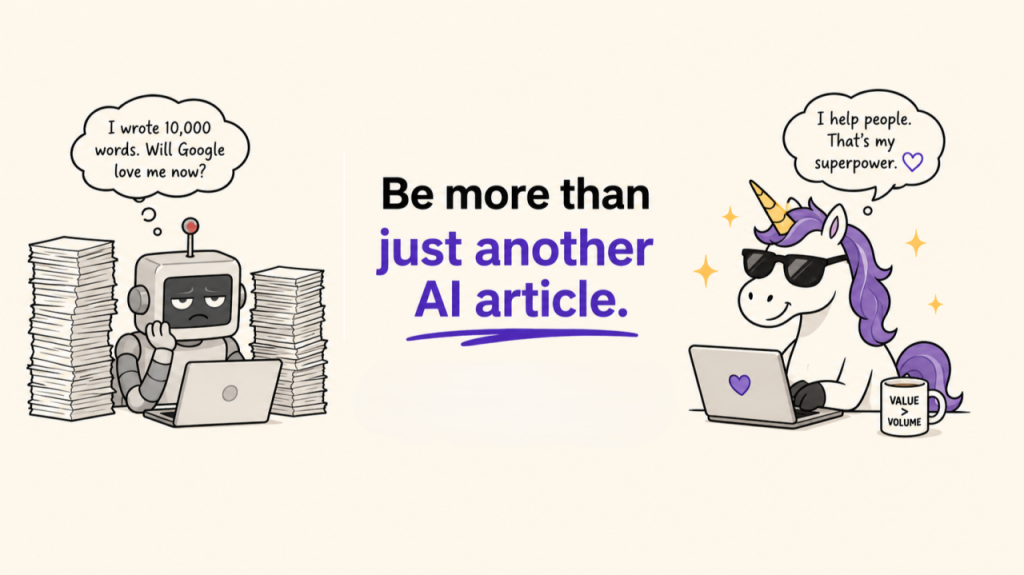
ChatGPT, while an amazing tool, has paved the way to mass-produce low-effort content that lacks depth and provides no original information.
Ahrefs analyzed 900,000 newly created web pages in April 2025 and found that 74.2% of them contained AI-generated content. Only 2.5% were entirely AI-authored, while 71.7% were a mix of machine and human writing.
So how do you stand out?
In this newsletter, I share with you 9 essential factors that make blog posts high-performing in the age of AI. And I assure you, it’s not the same list you’ve read a hundred times.
1. They have audience-specific framing
Write for a defined group, not for everyone.
Here’s a simple example. “How to Start a Blog” has been written a million times. AI can generate a version in ten seconds. But “How to Start a Food Blog for Busy Parents in 2026” – see the difference?
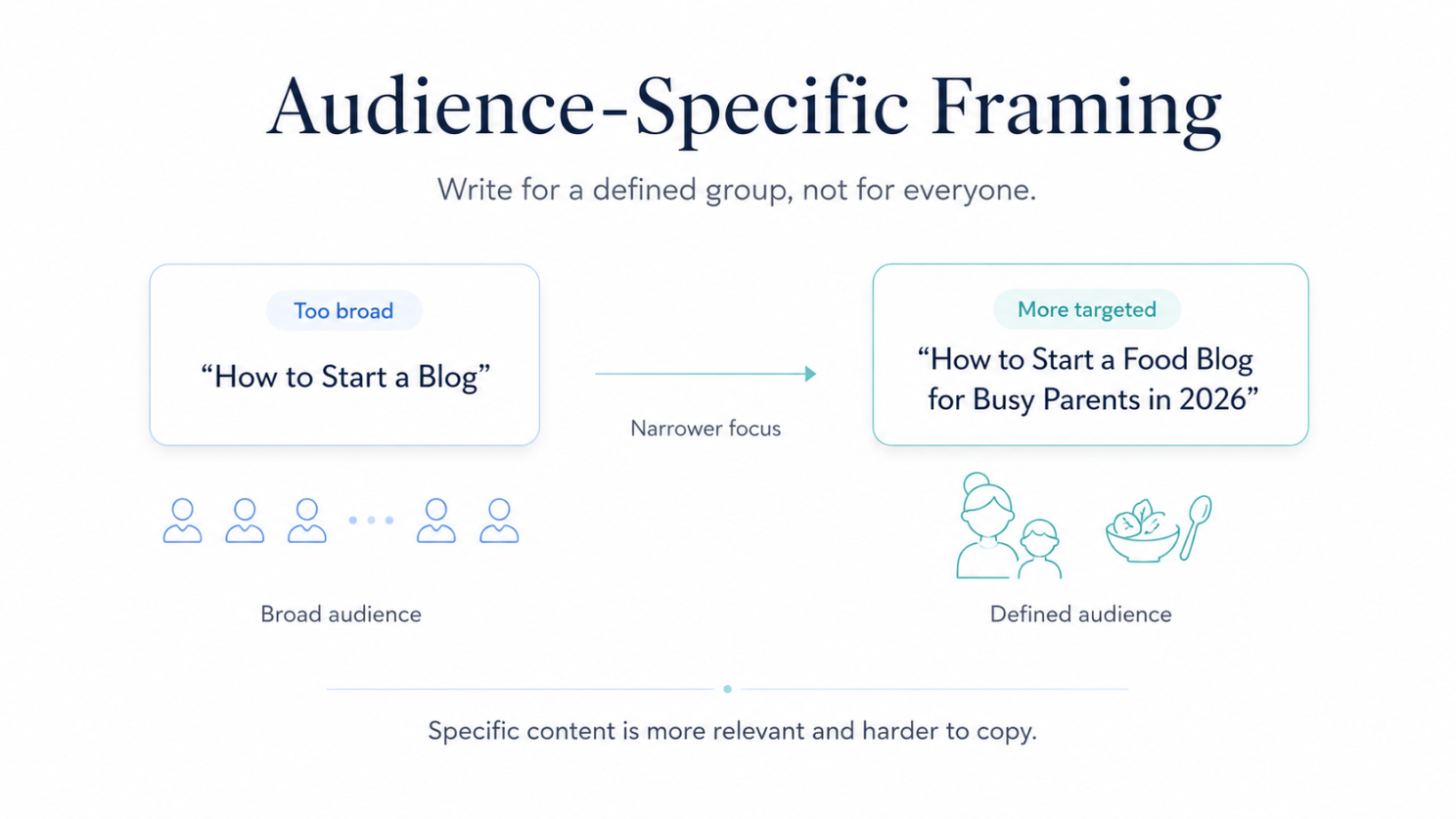
In this case, you’ll need to know about the specific factors that make a food blog successful as well as what your target audience wants. Often it’s less about using complex jargon, and more about relying on specific nuances.
When you narrow your audience, you shrink what you need to beat. Instead of competing with every article on the internet, you just need to be better than the few written for your exact reader. That’s a fight you can win.
A 2025 Stratabeat study of 300 B2B SaaS sites proved this. Companies using industry-specific targeting saw 43.4% higher rankings. Companies without it lost 37.6%. The reason is simple: niche content is harder to copy.
2. The information gain is pretty obvious
Information Gain is the idea that your content should offer the reader something they cannot get from the pages already ranking.
The crude math is simple: if your article does not contain at least substantial facts, perspectives, or insights absent from the current top results, it is competing only on authority and backlinks – both expensive and slow to build.
If it does contain that delta, a smaller site with real experience has the chance to outrank an incumbent.
When I think about Information Gain I put emphasis on these 5 factors:
- Proprietary data: Original datasets, benchmarks, surveys, or analysis that only you can provide.
- First-hand evidence: Screenshots, test results, tool outputs, documented outcomes, and lessons from real mistakes.
- Original frameworks: A process, model, rubric, or structure you developed yourself.
- Expert attribution: Insights from a clearly identified author or contributor with relevant experience and credible expertise.
- Freshness: Recent data, current examples, and time-sensitive context that keep the content relevant.
Score well on at least three of these and your content becomes hard to replicate. Score well on four or five, and it becomes practically uncopyable without your direct involvement.
3. They include first-hand use cases and real-life examples
Here’s what I’ve learned from writing tutorial content for years: share exactly how you solved the problem or used the tool.
Not what you read about someone else doing. What you actually did.
This is 100% unique by definition. No AI can replicate your specific experience, your screenshots, your tool output, your exact results, your mistakes, your “wait that didn’t work” moments.
This maps directly to Information Gain’s “first-hand evidence” dimension.
When I write plugin tutorials, I capture all the screenshots first, place them in the document, then explain what’s happening underneath each image.
The visuals become the outline. The writing becomes the explanation.
4. Sprinkle in forum and community insights
One of the easiest ways to add a unique angle AI can’t synthesize: quote real users from Reddit, Quora, WordPress.org forums, and any other community where your audience actually talks.
You can directly quote the users or summarize the insights from multiple comments. Either way, you’re adding original insights taken from real users’ conversations into your post, and AI can’t generate that because it didn’t happen yet.
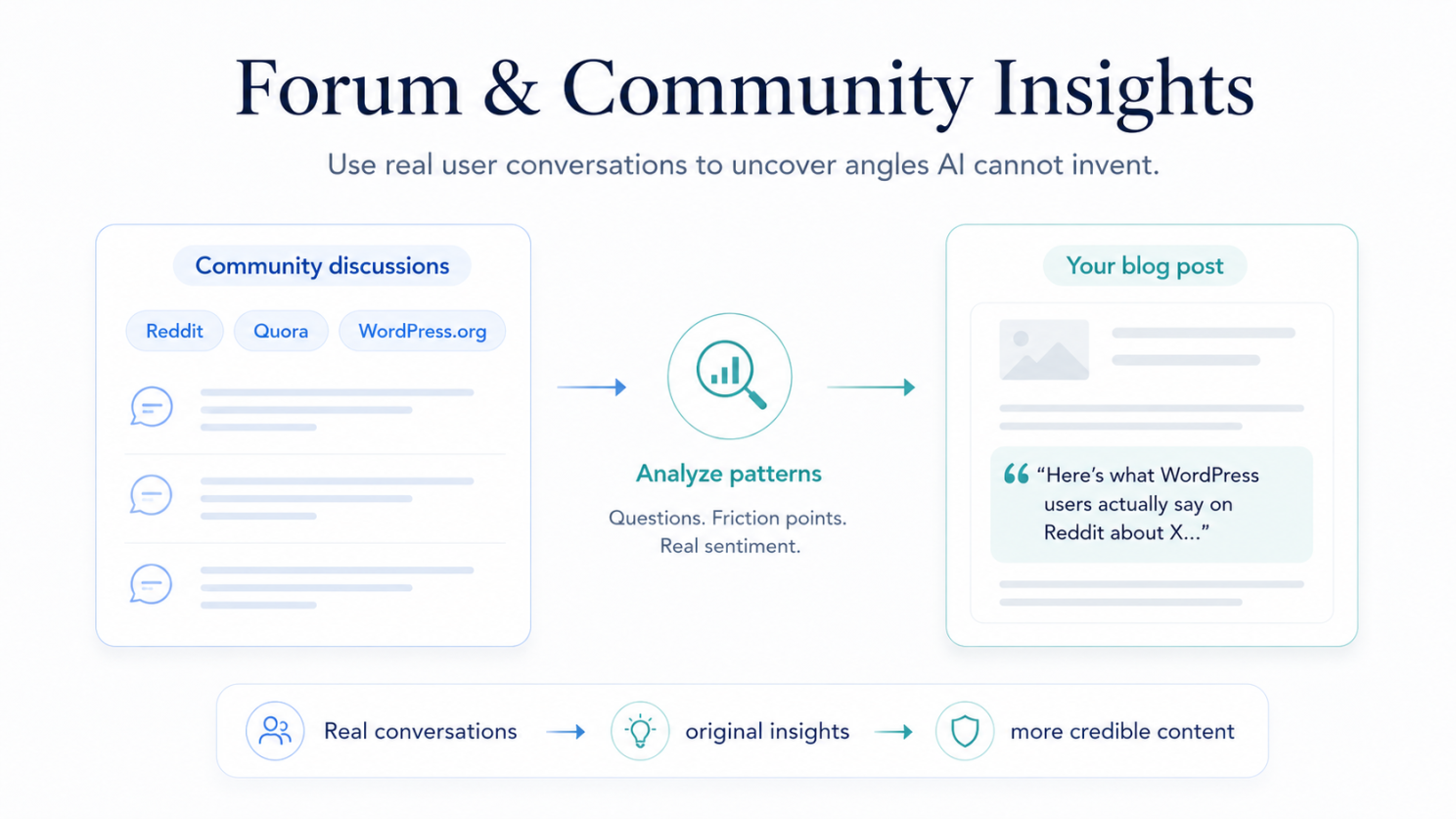
I do this constantly when I research topics. I’ll find a Reddit thread where people are debating a tool, and I’ll quickly analyze what the commenters are saying – I add my own insights around them while also quoting the original posts.
Try this format: “Here’s what WordPress users actually say on Reddit about X…” and let the community speak for itself.
I’ve been testing this on multiple blog posts of mine, and several AI responses have directly quoted the forum insights from my blog. I plan to publish a dedicated article on it in the future.
5. They have visuals beyond stock photos
When we talk about adding high-quality visuals to our blogs, what does it mean? Is it only screenshots or stock photos?
In my opinion, it’s much more than that. In addition to the typical image assets, you should also experiment with infographics, GIFs, memes, and short videos inside the blog.
And here’s what the numbers say: infographics earn roughly 3x more social shares than plain text posts. Posts with a video embedded get 2.8x more engagement than those without.
The reason is biological, not technical. Your brain processes visual information about 60,000 times faster than text. A well-designed image or a funny meme stops the scroll before a headline even gets a chance.

But as I said, not all visuals are equal. A generic stock photo of someone typing on a laptop does nothing.
A 9:16 flowchart image of your actual workflow of solving a problem – that’s valuable. A before-and-after comparison chart showing your real numbers – that’s gold. A well-timed meme that makes a serious point memorable – that’s shareable.
6. Embed contextual videos
This one is underrated.
When you embed a relevant video on your blog, users click, watch, and stay on the page – giving you a dwell time signal.
If the video actually helps, it satisfies user intent. Win-win.
I embed relevant videos in my step-by-step tutorials, and the results have been amazing. The reader watches the walkthrough, I get the engagement signal, and the video gets more views – it’s a win on two fronts.
Don’t embed a random video, though. Embed one that directly solves the problem your reader came for.
7. The writing is painlessly easy to read
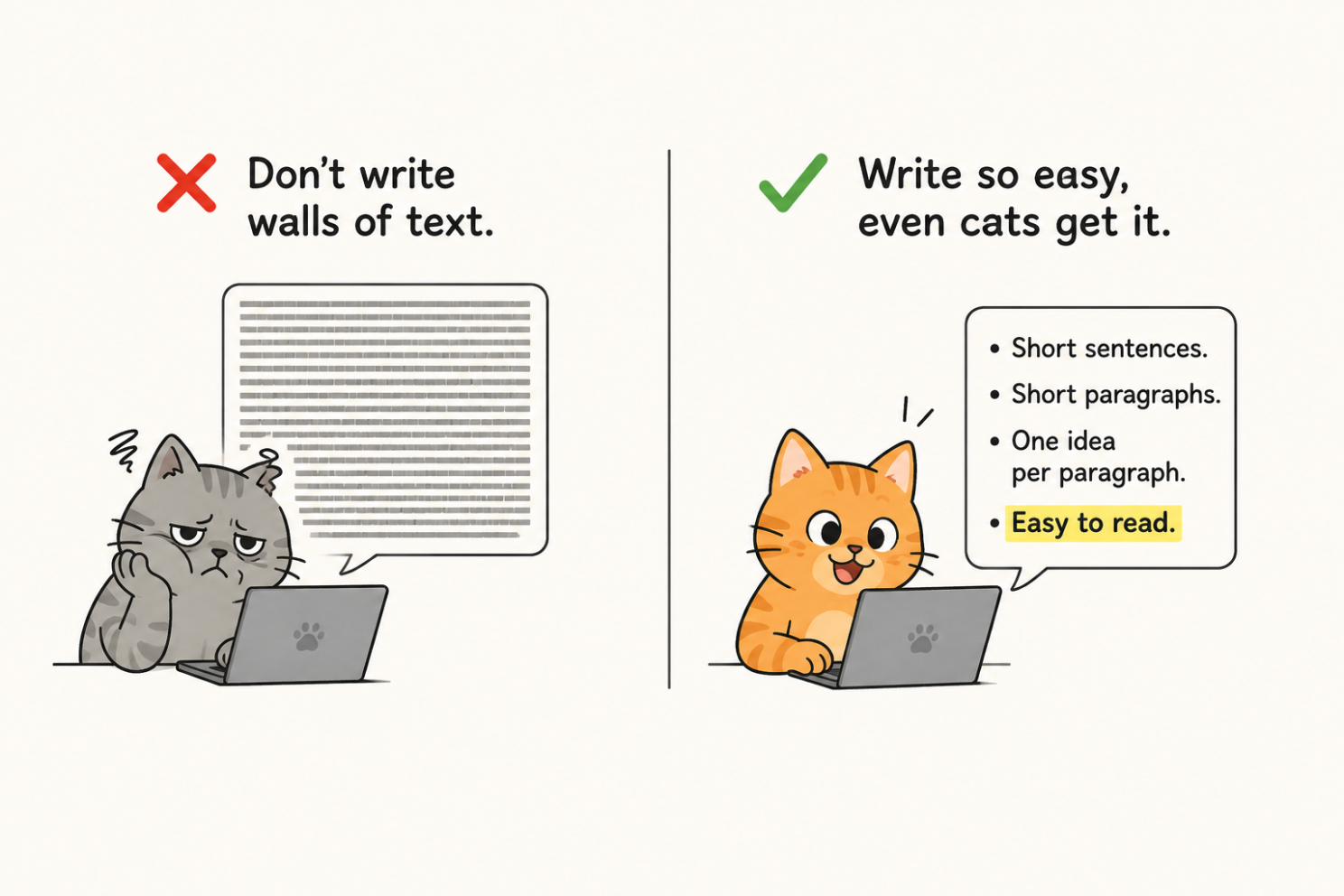
No one wants to read long walls of text.
Use short sentences. Short paragraphs. Grab attention fast.
With 7.5 million blog posts published daily worldwide, written attention is scarce.
A common finding among multiple 2025-2026 reading-behavior studies is that most readers no longer read word-by-word; they hunt for the specific point that matches their question.
I’m guilty of writing dense paragraphs sometimes. But the posts that perform best are the ones I edit ruthlessly, cutting every sentence that doesn’t serve the reader directly.
Use bold for emphasis. Use bullet points for lists. Use one idea per paragraph.
If a paragraph feels heavy, split it. If a sentence feels long, cut it in half.
Your reader is tired, distracted, and short on time. Meet them where they are.
8. The CTAs are not generic “Check Here”
Generic “Learn More” buttons only annoy the readers. On the other hand, contextual, benefit-focused CTAs win.
Say exactly what’s on the other side of the click, such as: “Download the Pre-made Blog Templates” instead of “Click here.”
If someone reads your post, finds it helpful, and sees a CTA that matches the next logical step, that’s not annoying. That’s helpful. That’s where conversions actually happen.
In 2026, the content-to-conversion path has also lengthened: roughly 41% of B2B buyers consume 3-5 content pieces before contacting sales, which means your CTAs have a higher purpose now – they are not just a single endpoint.
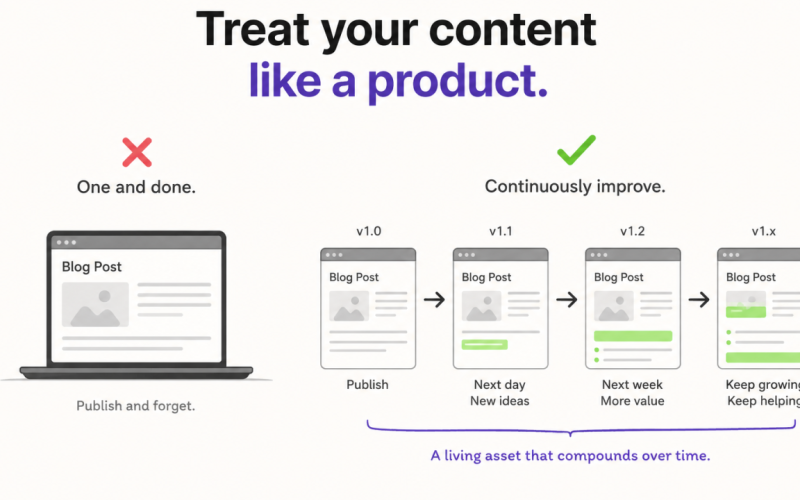
9. Treat your content as a product
How do you treat your newly launched products? You continuously nurture and make improvements – blog posts are the same.
Before I hit publish, I ask myself: does this actually help solve the user’s problem? Does it have first-hand evidence, a named framework or fresh hook, and a credible author or expert source?
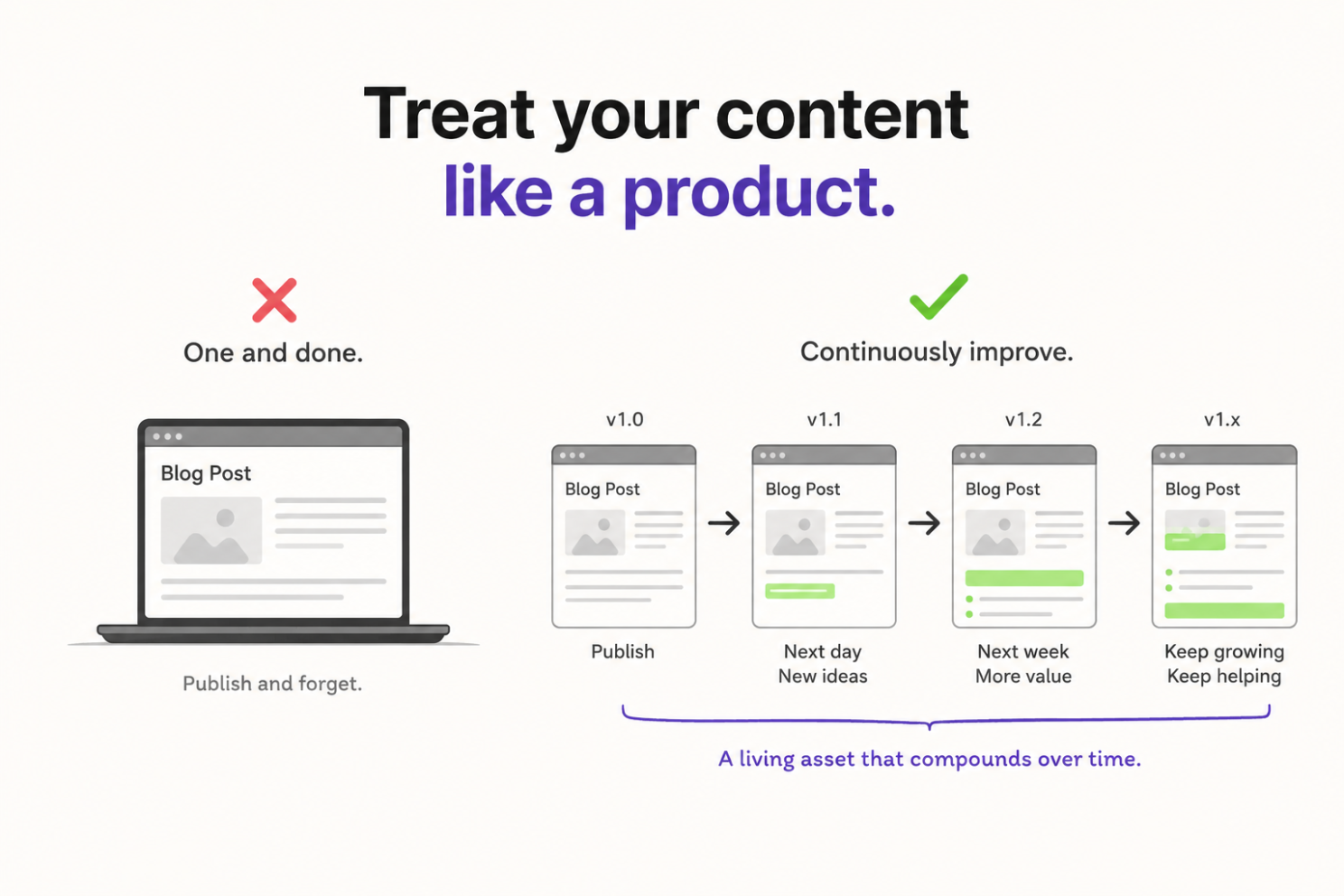
After it’s published, the work has only started. I come back to my content the very next day. I give it another look – often I get new ideas to add to it.
I come back a week later – and suddenly I find a new strategy to add to my article. And it keeps going.
A blog post isn’t a one-time event. It’s a living asset.
The blogs winning in 2026 treat content as a compound asset, not a one-time marketing tactic.
Summing Up
In 2026, your competition is not just with other companies’ written content but also against AI systems that can mass-produce content. Well, it’s not really a competition if you are already putting out valuable content.
But keep in mind that the line between AI content and Human content is very thin. So, to truly stand out, you need to add your unique voice, insights, first-hand experience and whatever that makes you, “You”.
And the only way to do that is to create something no AI could have generated on its own.
What’s one element you’ve started prioritizing that actually moved the needle? Drop it in the comments below.
— Abid Hasan Shishir